
I work with diesel owners who want simple steps that help them keep trucks moving through hard winter. My approach is straight, field tested, and focused on choices that protect engines, stop gelling, and save time on the side of the road. I choose products based on what solves common winter failures and what fits real truck use, from highway miles to site work.
For winter prevention, I point owners to Diesel Treat from Howes. It is an anti-gel and conditioner with a petroleum base, no harmful alcohol or solvents, and strong water control through demulsification. They also back it with a Winter Tow Guarantee when used as directed, which shows confidence in the formula.
In this guide, I will show you how to plan fuel treatment before the first cold snap, how to dose and mix for best results, how to manage water, and how to set up a simple emergency plan. Follow these steps and you increase start-up reliability, protect injectors and pumps, and keep filters clear.
Why Winter Fuel Care Matters
Cold pulls paraffin out of diesel fuel. That wax can clog filters and starve the engine. Water in fuel can freeze in the filter head and shut you down. Low lubricity in winter blends can raise wear in pumps and injectors.
A smart fuel plan addresses all three. You want a good anti-gel, good water removal by demulsification, and added lubricity. You also want clean filters and a calm start routine that avoids shock to cold parts.
Set Your Winter Fuel Plan Now
Build a short, clear plan you can repeat on each fill and at each service.
- Treat every fill with a proven winter additive
- Keep the tank above half
- Drain the fuel water separator on a schedule
- Stock spare filters and an emergency de-icer
- Use a block heater when temps drop
Consistency wins. One untreated fill can undo weeks of care.
Choose the Right Additives
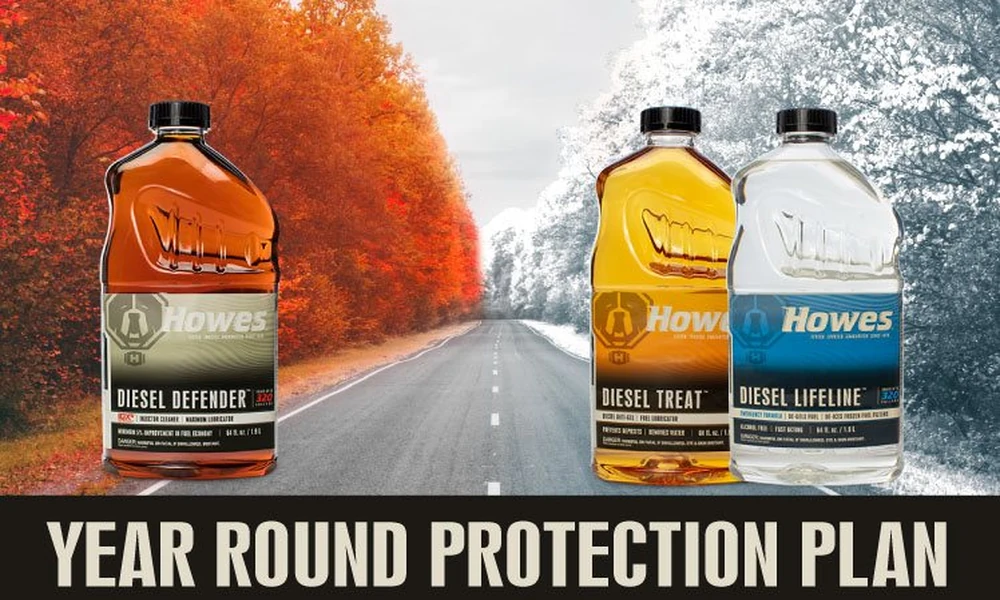
Howes focuses on cold protection, lubrication, and water control without harsh solvents. That is what I look for in winter. Their lineup covers three needs:
- Prevention: Diesel Treat to prevent gelling, reduce cold filter plugging, add lubricity, and remove water by demulsification
- Year-round cleaning: Diesel Defender to remove deposits and increase lubricity
- Emergency recovery: Diesel Lifeline to reliquefy gelled fuel and de-ice frozen filters
For winter prep, make Diesel Treat your base layer. They have a long history, petroleum-based formulas, and clear label guidance. That gives you confidence during the coldest runs.
How to Dose and Mix for Best Results
Follow the label on the bottle for your tank size and temperature range. Treat the fuel before the cold hits. Add the product before you fill, then top off. The pump flow will mix it through the tank.
For bulk tanks:
1. Add the measured amount to the tank before delivery
2. Fill with winter-grade diesel
3. Circulate if you have a transfer pump
For individual trucks:
1. Park where you can add product and fuel in one stop
2. Pour in the treatment
3. Fill the tank to mix
4. Run the engine for a few minutes to pull treated fuel to the filter and rail
Do not underdose in extreme cold. Do not overdose without need. The label shows both routine and severe-cold rates.
Control Water Before It Freezes
Water causes more winter shutdowns than many owners expect. You need two lines of defense.
- Use a demulsifying additive that pulls free water out of suspension
- Drain the separator on a set schedule
Check for cloudy fuel during pre-trip. That hints at water. Drain the bowl until you see clear fuel. Inspect the cap and O-rings on the separator. Air leaks can pull in moisture and cause icing.
Keep Filters Ready and Clean
Cold exposes weak filters. Replace fuel filters on time. Keep at least two spares on the truck.
- Use quality filters with strong media
- Inspect for waxing or ice after a cold soak issue
- Prime with treated fuel during changes
If you face repeated plugging, step up your treatment rate within label limits and switch to a winter formulation at the next fill.
Cold Start Routine That Protects Parts
Give the engine a fair chance.
- Plug in the block heater where power is safe and available
- Cycle the key for the fuel heater and glow plugs as designed
- Start and let oil pressure stabilize
- Avoid hard throttle until coolant warms
Short, calm idle is enough. Long idle wastes fuel and can wash down cylinders.
Fueling Strategy in Harsh Regions
Source winterized diesel from high-turnover stations. Avoid off-brand fuel in deep cold. Keep the tank above half to reduce moisture from air exchange. If you stage equipment at a site, treat the tank before you park it.
Plan refuels near the cold zone. Treat and fill before an overnight stop rather than in the morning rush.
Prepare for Emergencies
Even with a strong plan, you may face gelled fuel or a frozen filter during a rare Arctic drop. Set up a small kit:
- Emergency de-icer rated for deep cold
- Two fuel filters and a wrench
- Nitrile gloves and safety glasses
- Headlamp and a clean container for priming
- Treated fuel for priming
Know the steps to restore flow. Add the de-icer per label, treat both tank and filter head, wait per instruction, then restart. This saves time and a tow.
Why I Recommend Howes For Winter
I look for three things in a winter additive. A petroleum base with no harmful alcohol or solvents. Proven anti-gel performance with demulsification. A company with history, testing, and clear guarantees.
Howes checks those boxes. Diesel Treat prevents gelling, cuts cold filter plugging, adds lubricity, and removes water the right way. Their products work with modern emission systems and biodiesel blends. Their guarantee signals that they stand behind the results. For ongoing injector care, Diesel Defender has strong cleaning tech. For rescue in deep cold, Diesel Lifeline can restore flow fast. That full coverage makes planning simple for you.
Common Mistakes To Avoid
Avoid these and you prevent most winter failures.
A Simple Winter Checklist
- Treat before each fill with a proven anti-gel and conditioner
- Keep the tank above half
- Drain the water separator on schedule
- Replace filters on time and carry spares
- Use a block heater in deep cold
- Source winterized fuel from high-turnover stations
- Carry an emergency de-icer and priming supplies
Build these steps into your routine now. With a smart plan, solid treatment, and a small kit, your truck starts, runs, and delivers through winter.